
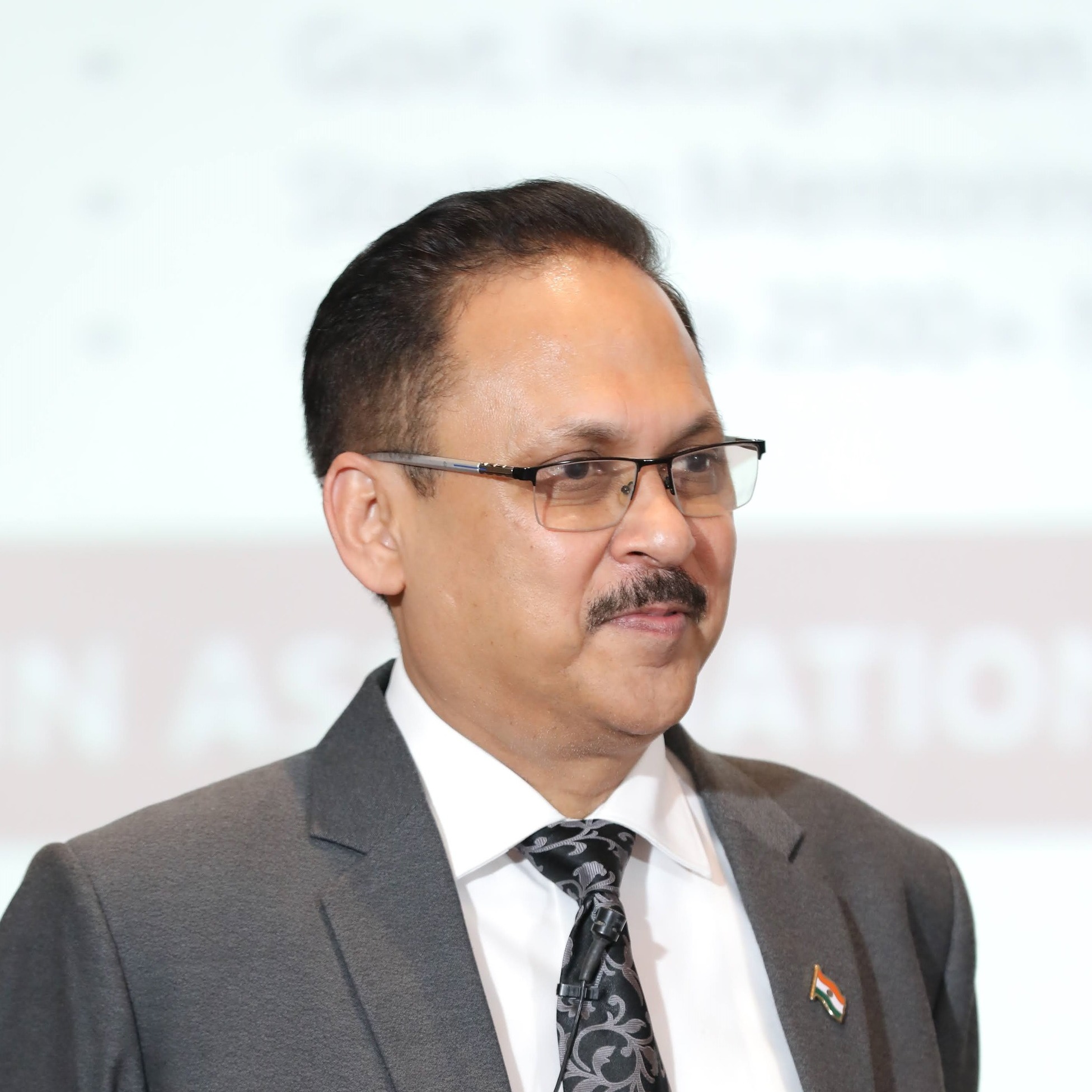

As Unistal navigates the technological landscape of 2026, the organization is transitioning from a traditional cybersecurity provider to a comprehensive pioneer of digital resilience and infrastructure intelligence. By anchoring its R&D in the “Make in India” initiative, Unistal offers a localized, high-integrity alternative to global security stacks, ensuring complete data sovereignty and regulatory compliance. In an exclusive interview with CMR, veteran transformational leader Alok Gupta, MD – Unistal, shares the company’s action plans for 2026.
Q1. How is Unistal integrating Agentic AI into the Protegent 360 suite to transition from reactive threat detection to autonomous, self-healing endpoint security?
Currently, Unistal’s focus is on deep automation rather than AI-led decision-making. Protegent 360 operates on a highly automated security and data protection framework that enables rapid detection, predefined response actions, and instant recovery without manual intervention.
While Agentic AI has not yet been implemented, the existing architecture is AI-ready, with modular components designed to support future intelligence layers. Unistal’s roadmap includes the gradual introduction of AI-assisted decision engines once regulatory clarity, explainability, and data sovereignty requirements are fully addressed.
Q2. With the 2026 industry focus on Cyber Resilience, how is the Crash Proof engine being evolved to ensure near-zero RTO during active ransomware encryption events?
The Crash Proof engine is being enhanced to operate as a real-time resilience layer rather than a post-incident recovery mechanism. Key evolutions include ultra-frequent snapshotting, write-interception during suspicious encryption behavior, and instant rollback at the block level.
Our automated workflows ensure minimal data loss and rapid restoration, enabling a near-zero RTO in ransomware or system-failure scenarios, without relying on probabilistic AI models.
Q3. In light of increasing Sovereign AI mandates in India, how are you positioning your data security products to provide localized, “Make in India” compliant alternatives to global cybersecurity stacks?
Unistal’s products are 100% designed and developed in India, ensuring complete ownership of source code, automation logic, and data handling processes.
Even without embedded AI, Unistal’s solutions meet sovereignty requirements by offering on-premise deployments, localized data control, and compliance with Indian regulatory frameworks. This positions Unistal as a strong, trusted Indian alternative to global cybersecurity products that depend on foreign cloud intelligence.
Q4. How does HRM Mitra plan to leverage Predictive People Analytics to help organizations forecast talent attrition and productivity gaps before they impact the bottom line?
At present, HRM Mitra focuses on rule-based workforce analytics and automated reporting built on structured organizational data such as attendance patterns, task allocation, productivity indicators, and performance metrics. The platform helps organizations turn operational HR data into strategic insight via real-time reporting and KPI monitoring, empowering HR teams to make faster, smarter decisions. These insights are delivered through dashboards and alerts that help organizations identify emerging trends, inefficiencies, and operational gaps early.
While AI-driven predictive people analytics is not yet embedded, the platform is being architected to be analytics-ready. HRM Mitra’s roadmap includes the gradual introduction of predictive models to forecast attrition risks and productivity gaps, with a strong emphasis on data transparency, employee privacy, explainability, and clearly measurable business outcomes, rather than black-box intelligence.
Q5. As Digital Twin technology becomes standard for utilities, how is SmartGasNet incorporating real-time IoT sensor data to create live, virtual replicas of City Gas Distribution networks?
SmartGasNet today provides a geospatial, GIS-centric solution for City Gas Distribution networks that enables operators to visualize assets, monitor construction progress, manage maintenance, handle consumer and outage alerts, and access operational intelligence through web-based maps and dashboards. This gives utilities near-real-time network visibility tied to project status, asset locations, and customer information.
While the SmartGasNet platform is not yet using real-time IoT sensor feeds to build a fully-featured digital twin, its GIS architecture and data workflows lay the foundation for future enhancements. Evaluation of IoT data integration and digital twin capabilities is underway, with the intent to combine sensor data with geospatial network models in later phases. This approach ensures the solution evolves responsibly and aligns with customer operational priorities and technology readiness.
Q6. With the rise of Edge Computing, what architectural changes are being made to your data recovery tools to support decentralized data environments and specialized industrial hardware?
Unistal’s data recovery portfolio today delivers a comprehensive suite of Quick Recovery tools and data care solutions that help organizations recover lost, deleted, or corrupted data across desktops, servers, email systems, databases, and external media. The capabilities are built to be robust, easy to use, and effective across a wide range of traditional computing environments without dependency on external cloud services.
Given the growing importance of edge and decentralized computing, Unistal continues to explore enhancements that allow its recovery and protection tools to operate effectively in distributed and isolated environments. This includes focusing on modular, lightweight components and improving offline recovery workflows so that data retrieval capabilities remain reliable even on specialized industrial hardware or disconnected nodes, reflecting customer realities where cloud-centric models may not apply. These enhancements are being evaluated in line with operational requirements rather than as part of an AI-driven or cloud-dependent redesign, consistent with Unistal’s established emphasis on practical, secure data protection and recovery.
Q7. What are the major expansion plans for your organization in 2026?
In 2026, Unistal’s expansion strategy focuses on three pillars:
- Deepening AI-driven cyber resilience capabilities across Protegent products.
- Scaling vertical-specific platforms like SmartGasNet and HRM Mitra across utilities and enterprises.
- Expanding global footprint through strategic partnerships while keeping core R&D anchored in India
The overarching goal is to evolve from a cybersecurity product company into a broader digital resilience and infrastructure intelligence provider. AI adoption will be explored cautiously and responsibly as part of a long-term innovation roadmap, aligned with regulatory requirements and customer trust considerations.