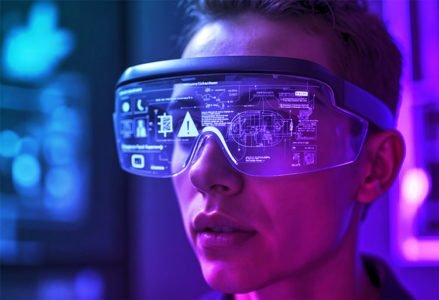


Gurugram / New Delhi, March 19, 2026. India’s smart glasses market is entering a breakout phase, projected to expand 16-fold over the next five years to exceed 3.2 million units by 2030, according to CyberMedia Research (CMR)’s latest India Smart Glasses Market Review for CY2025.
This growth, at a robust ~74% CAGR, is being fueled by the success of Meta’s Ray-Ban smart glasses, rapid advancements in AI integration, and a decisive shift toward lifestyle-led, design-first wearable technology.
In H2 2025, smart glasses shipments surged 145% sequentially over H1, signaling accelerating consumer adoption and a transition from early experimentation to early mainstream acceptance.
“The smart glasses market is evolving at the intersection of AI, fashion, and wearable computing,” said Mukesh Sharma, Senior Analyst, Industry Intelligence Group (IIG), CyberMedia Research (CMR). “While connected glasses are seeding the market, the real value lies in standalone AI smart devices. The current momentum signals a structural shift—smart glasses are moving from niche gadgets to intelligent, always-on consumer interfaces.”
Market Landscape:
- Volume vs. Value Divergence Defines the Smart Glasses Market: Connected (smartphone-tethered) glasses lead on volume — accounting for 57% of total CY2025 shipments – but standalone AI smart glasses dominate value, contributing 84% of total market revenue despite representing only 43% of units shipped. This divergence underscores a decisive shift in profitability toward premium, AI-integrated devices.
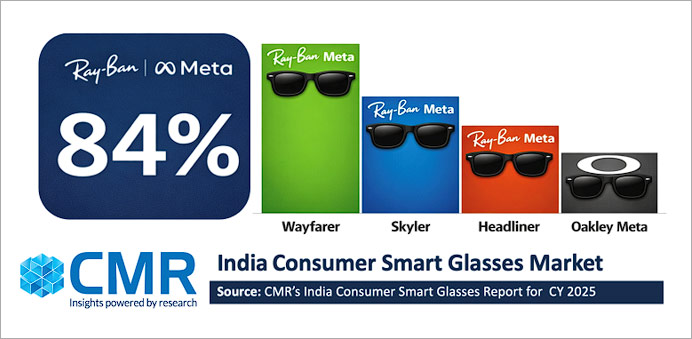
- In CY2025, the Ray-Ban Meta portfolio accounted for approximately 85% of the overall market, reflecting the power of brand equity, design, and first-mover advantage.
- Within the portfolio, the Wayfarer continues to anchor demand with 85% share, followed by Skyler (10%), Headliner (2%), and emerging Oakley Meta variants (3%), reflecting early signs of style diversification and portfolio expansion.
“Smart glasses are becoming an always-on, ambient interface—one that reshapes how information is consumed, not just a smartphone companion. India’s voice, video, and vernacular-first usage patterns make this shift especially significant. The next growth phase will be won by whoever delivers deeply integrated, context-aware, vernacular-first experiences, while also ensuring robust privacy safeguards and addressing user concerns around always-on data capture,” added Prabhu Ram, Vice President (VP) – Industry Research Group, CyberMedia Research (CMR).