






Jul 30, 2026
Beyond Digitalization: Why Cognitization Will Define the Next Era of Supply Chains
Read More

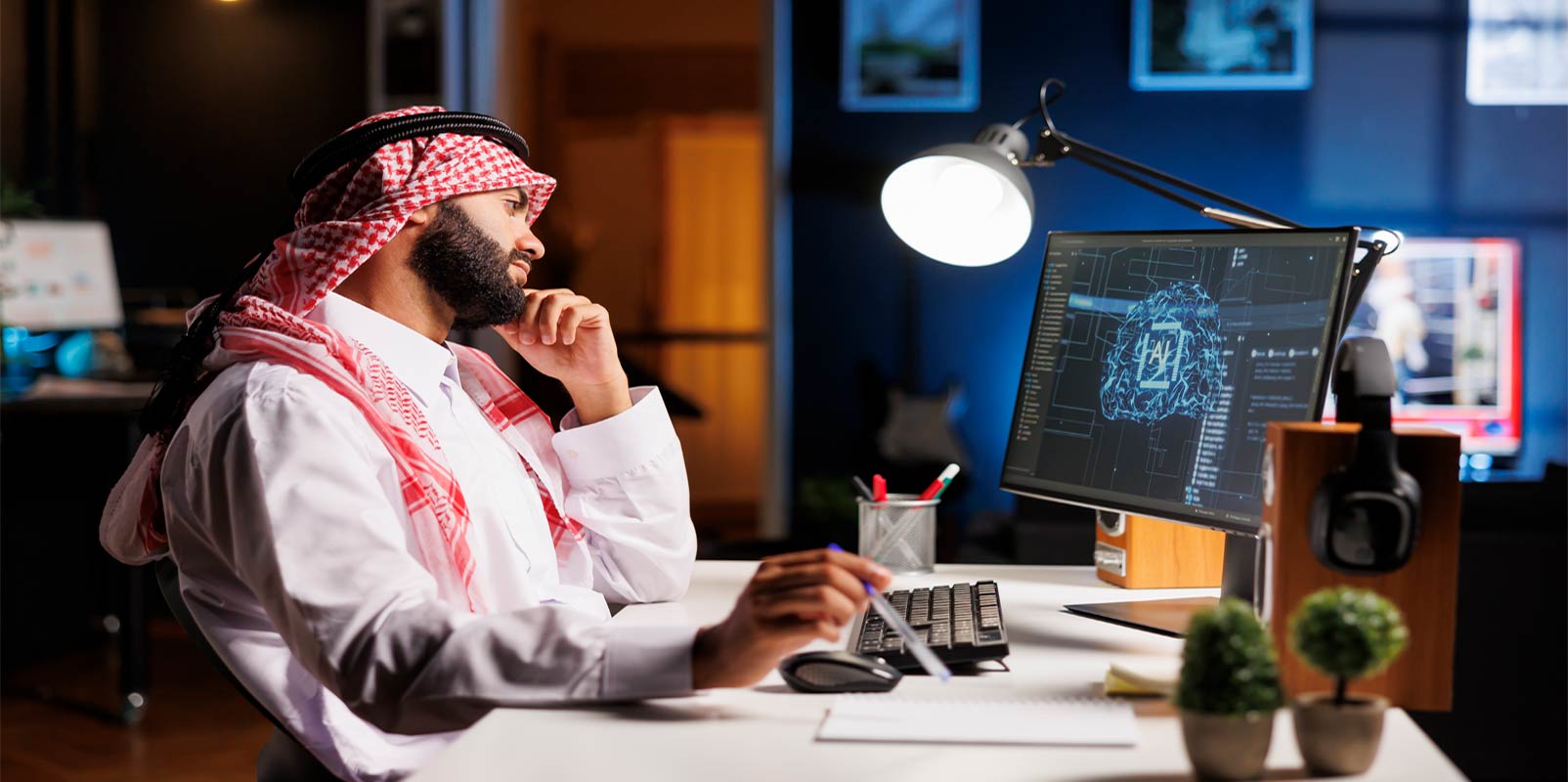
The worldwide Artificial Intelligence and Machine Learning market, valued at $86.9 billion in 2022, is expected to grow to $15.6 trillion by 2030. AI and ML will be significant contributors to the global economy over the next few years, and the countries that do not adapt to the new challenges will miss out on significant economic growth opportunities.
Seeing this possibility, the countries in the Middle East have already started the process of accruing the benefits. It is estimated that the Middle East will garner 2% of the global revenues from AI and ML, which will be valued at $320 billion by 2030.
Saudi Arabia will benefit most of these countries and is expected to earn $135.2 billion by 2030, contributing 12.4% to its GDP. In relative terms, the United Arab Emirates will get the most significant benefit at 14% of its GDP by 2030.
The region is expected to grow at 20-34% annually in AI-related businesses, with the UAE being at the top, followed by Saudi Arabia. These growth rates are unsurprising as UAE was ranked 33 in the Global Innovation Index in 2021, while Saudi Arabia was among the top 10 countries in several sub-indexes.
The United Arab Emirates is at the forefront of the 4th Industrial Revolution and has made rapid progress in AI and ML. Dubai is also blazing the trail. The UAE government has put advanced technologies at the forefront of its policy decision, and it was the first in the world to appoint a minister dedicated to AI.
For the Middle East, like in any other part of the world, AI and ML have applications across sectors like education, banks and financial organizations, government, healthcare, security and transportation.
Using AI and ML, the governments in the region have been developing smart cities and are incorporating advanced technologies to make life easier for their citizens. Abu Dhabi and Dubai were ranked the best smart cities in the region for the second time in a row in 2021. Abu Dhabi has prepared Vision 2030, which aims to wean the government away from natural resources and focus on the knowledge economy. A significant effort in this direction is developing smart cities.
Saudi Arabia has embarked on its ambitious NEOM project, where a 170-km-long smart city, which AI will power, will be developed. It will make use of renewable energy and allow communities to be hyper-connected. Using big data will develop solutions for the transportation and movement of freight.
In healthcare, AI and ML can revolutionize the diagnosis, drug development, training and online consultation. During Covid, Saudi Arabia developed an advanced integrated system using AI at the King Faisal Specialist Hospital and Research Centre to help respond to Covid emergencies better.
In transport, though self-driving cars have faced legal, regulatory and other challenges in the rest of the world, in the Middle East, especially UAE, the focus has remained on such modes of transport. Dubai aims to have 25% of all its cars self-driven by 2030, while Abu Dhabi plans to introduce them shortly.
For security reasons, facial recognition systems, which use AI tools, are already being used in airports and other places where many people gather. As it has faced backlash in many countries, developers are including tools that can differentiate between personal and public data, restricting governments from misusing applications and increasing public acceptability of the latest technologies.
Fintech has seen tremendous growth in the last two years, thanks to Covid, as the majority of the world’s population was forced to make purchases online, from food to entertainment. It was no different in the Middle East. It is predicted that the Middle East and North Africa (MENA) region will have at least 45 unicorns worth over $100 billion by 2030.

For years, supply chains were designed with one goal in mind: efficiency. Companies optimized costs, streamlined logistics, and...
More Details
If you are currently sitting on the fence about building a new PC, upgrading your workstation, or replacing...
More Details
The U.S.–China relationship has evolved far beyond a traditional tariff dispute. What began in 2018 as a trade...
More Details







