






Jul 30, 2026
Beyond Digitalization: Why Cognitization Will Define the Next Era of Supply Chains
Read More


At Autodesk University 2026, Autodesk outlined a vision for AI that goes beyond adding copilots to professional applications. The ambition is to build an enterprise intelligence layer that understands user context, draws on project and industry data across Autodesk’s platforms, and connects projects, workflows, and the relationships between design, making, and operations.
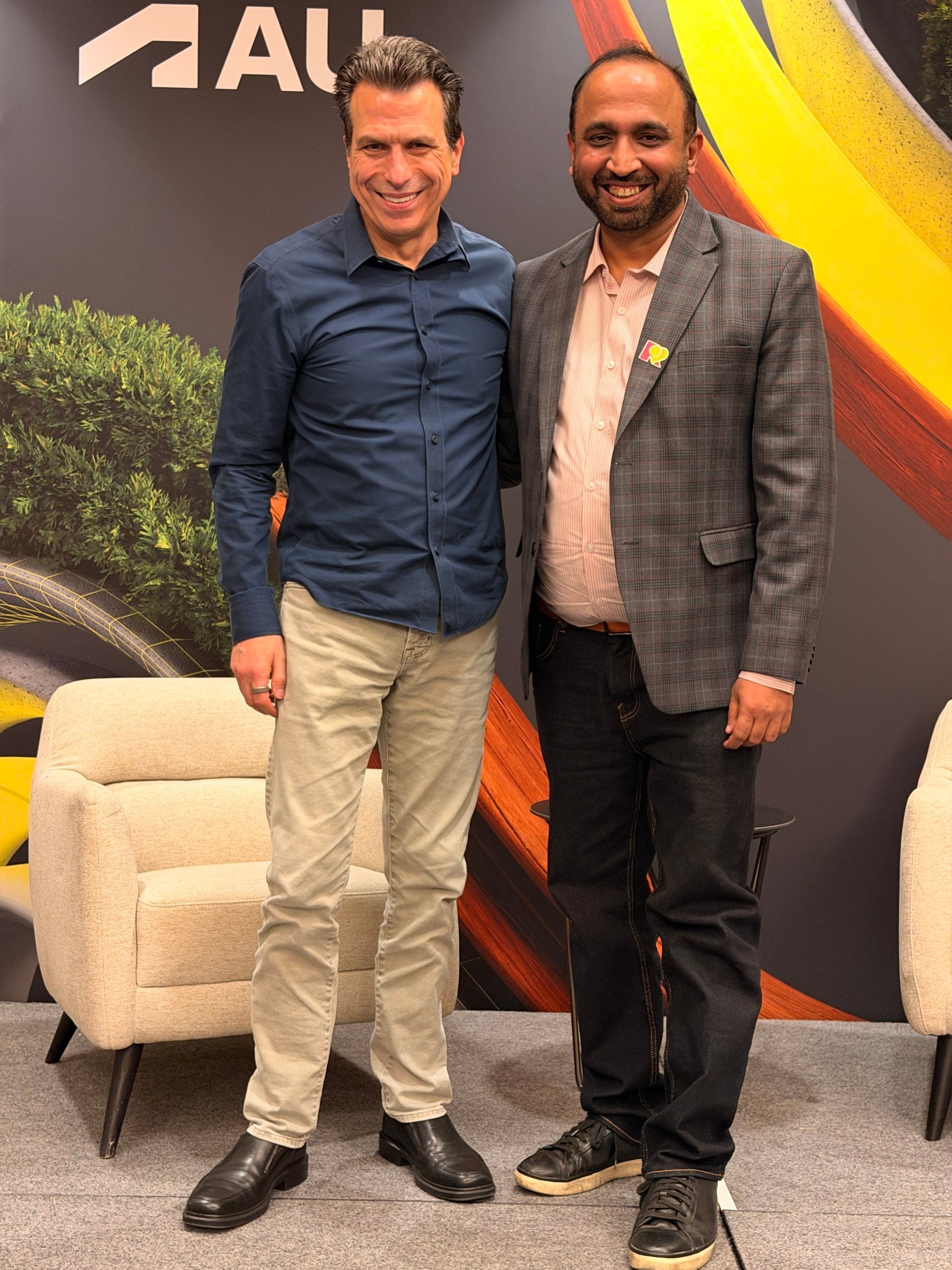
According to Autodesk CEO Andrew Anagnost, “Autodesk is building solutions that are rooted in the realities of design and make AI that understands projects, not just prompts. Project intelligence informed by data and context that underpins completely new experiences, because that’s what it takes to give enterprises more capacity to design and make what matters.”
The tougher question is trust and accountability, particularly when AI gets something consequential wrong.
A construction schedule, engineering assembly, manufacturing process, media asset, or building in operation carries cost, safety, regulatory, contractual, and reputational consequences. A model that reasons well in the abstract does not automatically become useful inside those environments.
That is where project intelligence matters.
When AI recommends a design change, retrieves an engineering precedent, prioritizes a construction task, or modifies a production asset, users need to know more than the answer. What information did the system use? What did it change? Where does human responsibility remain?
As Autodesk CTO Raji Arasu noted, enterprises are grappling with three questions around AI: Can AI be trusted? Can it connect to the data and workflows organizations already run on? And can it scale with organizations?
Trust therefore depends on understanding where an answer came from, what the system is permitted to do, and when a professional must intervene.
There is another shift underneath all of this.
If AI makes engineering knowledge easier to retrieve, validation may become the constraint. If it generates design alternatives in seconds, determining which alternatives satisfy real-world requirements may become harder.
That is why simply adding AI to an existing process can produce incremental gains. The larger opportunity is to rethink the process itself around the user and the data that gives the workflow its context.
Forma, Fusion and Flow: One Architecture
Forma, Fusion, and Flow are central to Autodesk’s effort to connect the data and workflows its AI systems require.
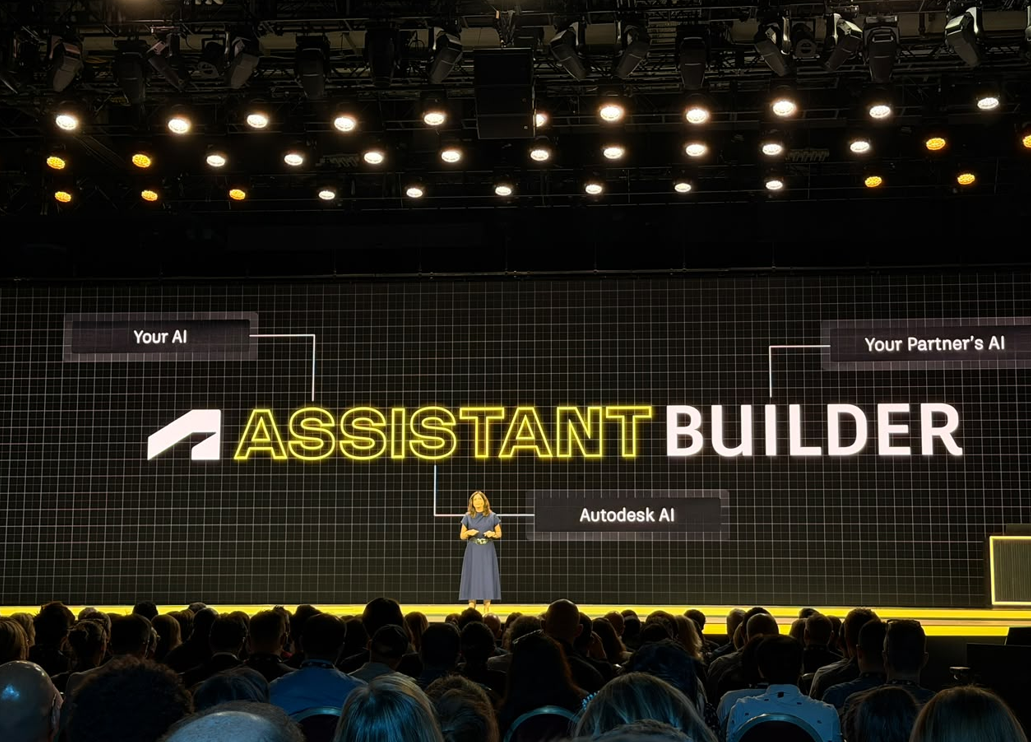
The rebuilt Autodesk Assistant is intended to operate across products and projects rather than remain confined to a single application. Autodesk is also introducing an AI Orchestrator that can route work according to factors such as accuracy, speed, security, and cost. That points to an important shift in enterprise AI: the question is no longer simply which model is most capable, but which agent or model should perform a particular task, with what data and under what controls.
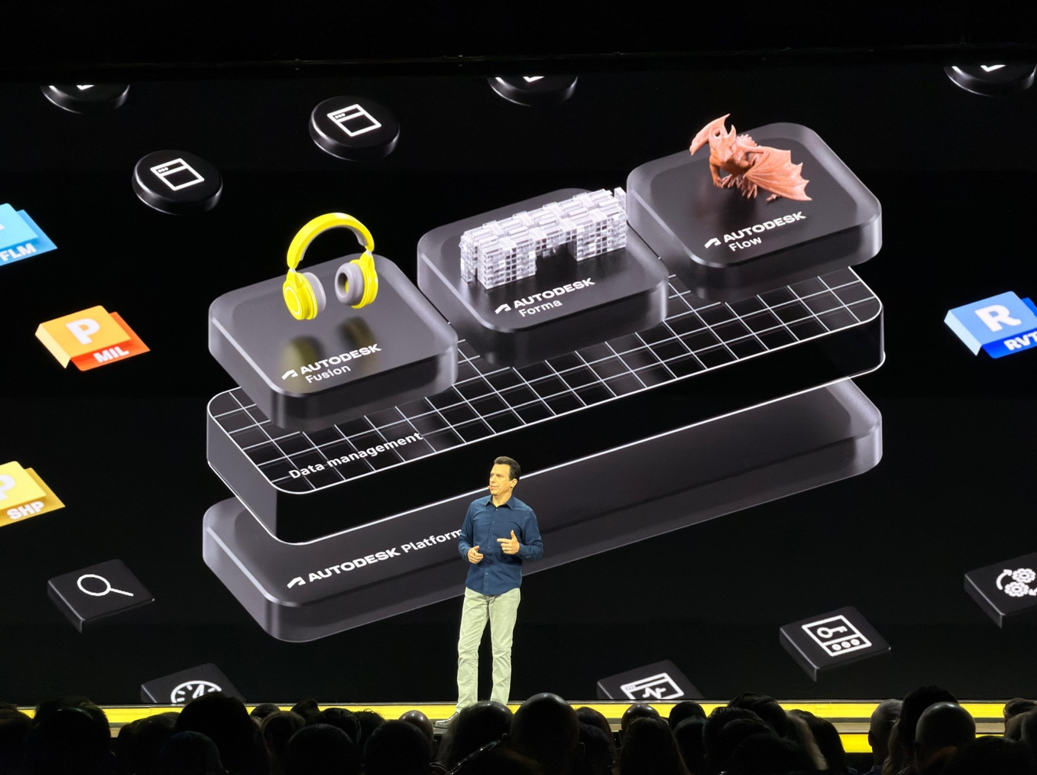
Forma illustrates this particularly well.
Autodesk is positioning Forma as an end-to-end industry cloud for AEC, extending from planning into design and construction. Civil 3D will become a Forma Connected Client, allowing civil engineering workflows to maintain closer connections with architectural and building-design context.
This matters because AEC projects are not isolated disciplines. Roads, utilities, terrain, and subsurface conditions influence what can ultimately be designed and built.
Autodesk is effectively trying to extend the value of BIM beyond the model itself by connecting the information, decisions, and context around a project.
That is important for AI.
AEC AI cannot rely only on general knowledge. It needs project data, site conditions, design intent, requirements, schedules, and the decisions that shape a project. The more of that context remains connected across the lifecycle, the more useful AI can potentially become.
This also explains Autodesk’s longer-term direction for Revit. The company says more design, analysis, coordination, and documentation work that happens in Revit today will eventually happen directly in Forma, while Revit continues to advance and connect more deeply with the cloud environment.
The strategic shift is therefore not simply from desktop software to cloud software. It is toward making the project itself the unit of intelligence.
The practical examples are already becoming more specific. Autodesk Assistant can search project information. Building Layout Explorer can help professionals explore multifamily layouts. AI-powered Revit workflows can automate repetitive documentation. In Forma Data Management, Drawing Change Analysis is designed to identify meaningful differences between revisions, while Drawing Compliance Review can surface potential issues against codes, standards, and owner requirements.
These are not generic chatbot experiences. They place AI inside structured workflows where the system has access to domain-specific information and where a professional remains responsible for reviewing the result.
The Daily Log Agent points in a similar direction on the construction side, turning spoken site updates into structured project information. The value is not simply transcription. It is reducing the friction between what happens on a jobsite and what becomes part of the project’s formal information record.
From Tasks to Capacity
The same principle extends across Fusion and Flow.
Fusion’s AI capabilities can automate repetitive engineering work, including tasks such as converting imported geometry. Inventor Assistant can use APIs and iLogic to help modify models, while Vault makes historical engineering information more searchable and usable in current projects.
But retrieval is not judgment.
A historical design may be relevant without being appropriate. A component may have been superseded. A drawing may reflect assumptions that no longer apply. AI can reduce the time required to find information without establishing that it should be used.
That distinction becomes increasingly important as Autodesk moves toward more agentic workflows. An AI system that can retrieve, reason, and act creates substantially more value than one that merely generates text. It also creates a larger governance requirement.
Flow presents a similar challenge in media and entertainment. Generative capabilities become more valuable when outputs remain editable and connected to professional workflows, assets, and production processes. Autodesk’s work across tools such as Maya and the 3D Editor points toward AI becoming part of production rather than a separate generation step.
The principle is consistent across industries: useful AI must operate inside the environment where professionals work, using the data and constraints that define the job.
The same logic extends beyond design and making into operations.
Tandem, FlexSim, and MaintainX integrations move Autodesk closer to a design-make-operate-learn loop in which operational data can inform subsequent decisions. A digital twin is more valuable when information from the operating asset can eventually influence future design, maintenance, simulation, or planning.
But that also raises questions about data ownership, access, governance, and accountability. The organization that designs an asset may not operate it, and the information required to make an intelligent decision may sit across multiple stakeholders.
The physical world does not have a refresh button.
The Bigger Shift
This is ultimately what gives Autodesk’s AI strategy its broader significance.
The first phase of enterprise AI is straightforward: make an existing task faster.
The harder phase is changing the workflow itself.
If AI changes what a professional can accomplish in ten minutes instead of ten hours, organizations eventually have to reconsider what those ten hours were being spent on. Otherwise, they have simply accelerated one step in a process that remains fundamentally unchanged.
That is where Anagnost’s idea of capacity becomes important.
AI can initially create individual capacity by removing repetitive work. The larger opportunity comes when organizations redesign workflows around that new capacity. And beyond the organization, the opportunity becomes even broader when project participants, suppliers, contractors, operators, and other stakeholders can work from connected information.
Autodesk’s three industry clouds provide the architecture for that progression across Design, Make, and Operate.
When project information and context remain connected as work moves from planning to design, engineering, construction, manufacturing, and operations, professionals gain a clearer picture of what they are working with, while AI gains a more grounded foundation from which to assist.
That is the transition from task automation to project intelligence.
The next test is execution.
Autodesk will need to demonstrate that its data foundation can remain connected across heterogeneous customer environments, that AI can operate with enough context to be useful, and that increasing autonomy does not come at the expense of professional control.

India’s smartphone market is undergoing a structural shift in storage preferences, driven by rising premiumization and the rapid...
More Details
If you are currently sitting on the fence about building a new PC, upgrading your workstation, or replacing...
More Details
India’s smartphone market is undergoing a structural shift in storage preferences, driven by rising premiumization and the rapid...
More Details







