


Tamil Nadu is home to about 43 lakh registered MSMEs and leads the country in exports of automobiles, electronics, textiles and leather, yet a large share of its small and micro units still run on machines a decade older than what competitors in China and Vietnam use, and absorb power tariffs that have risen sharply over the past four years. These are the kind of gaps that the state’s small industries have been pressing the government to address, even as Tamil Nadu chases its target of becoming a one trillion dollar economy.
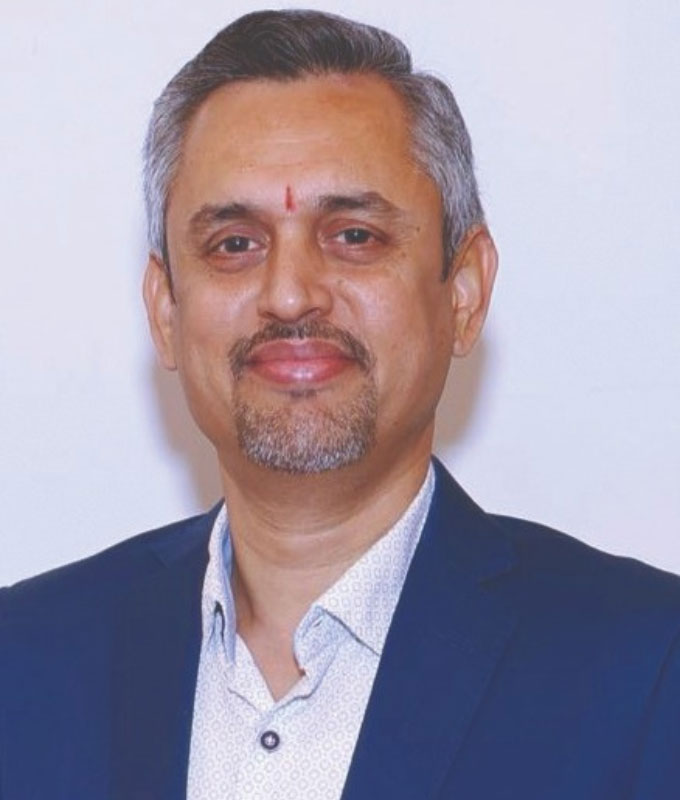
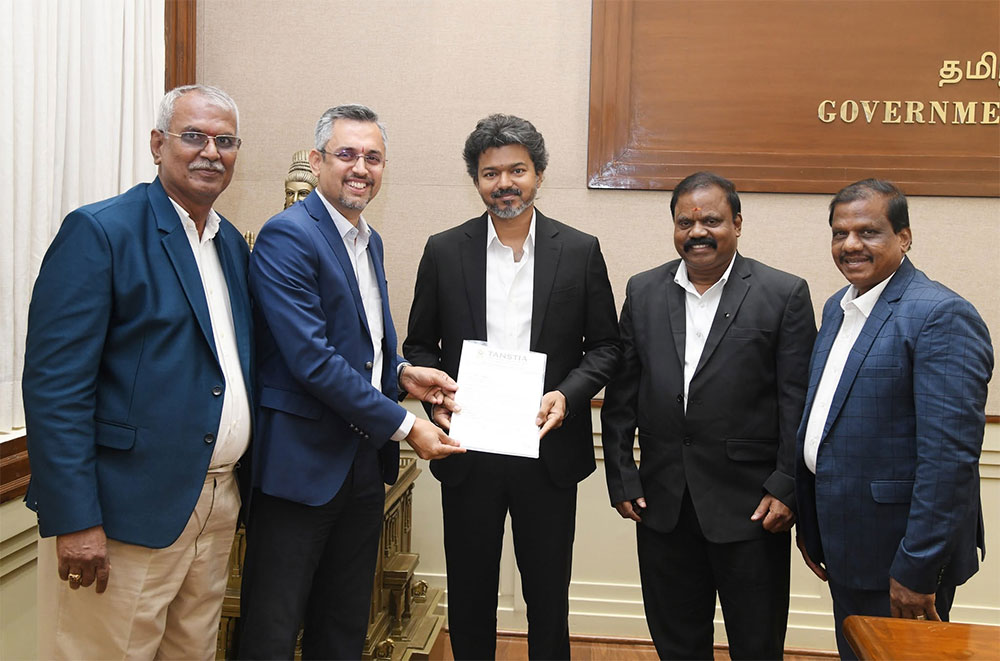
S. Vasudevan, President of the Tamil Nadu Small and Tiny Industries Association (TANSTIA), met Chief Minister Thiru C. Joseph Vijay on 20 June and submitted a detailed memorandum on these and other challenges facing the state’s micro and small industries. Vasudevan said the Chief Minister heard out every point raised by the association, which has represented small-scale entrepreneurs across Tamil Nadu since 1956. The memorandum covers electricity tariffs, pollution board clearances, land allotment, single window approvals, public procurement and technology upgradation.
Machines a decade behind, TANSTIA seeks technology upgradation subsidy
On automation and artificial intelligence, Vasudevan said Tamil Nadu’s MSMEs are roughly a decade behind counterparts in China and Vietnam on machine tools such as CNC and VMC units, which consume less power, need fewer hands and deliver three to four times the output of older machines. He called for the central government to revive the Technology Upgradation Fund Scheme, discontinued two to three years ago and repeatedly flagged by TANSTIA in its letters to the government of India. He also pressed for accelerated depreciation of up to 150 per cent instead of the standard rate written down over seven years, along with grants or import duty relief to help MSMEs invest in newer machinery, automation and research and development, an area where Indian MSMEs currently have little room to invest on their own. On sector performance, he said textiles, garments, auto components and services are doing well, while job-work fabrication units and ancillary units supplying large industries are lagging and need targeted support.
Power tariffs remain the biggest strain
Vasudevan said fixed charges for LTCT connections stood at ₹35 per kilowatt some years ago and have since climbed to ₹168 per kilowatt, a rise he described as almost 400 times the original rate. TANSTIA’s memorandum asks the government to bring fixed charges for LT 3B connections of 20 KW to 50 KW down to ₹50 per kilowatt, and for 50 KW to 112 KW down to ₹100 per kilowatt, with a progressive billing structure and the LTCT threshold raised from 112 KW to 150 KW. The association has also asked that peak hour charges be scrapped altogether. Vasudevan pointed out that Tamil Nadu was declared a power surplus state under the late Chief Minister J. Jayalalithaa and now generates significant renewable capacity, yet MSMEs pay 15 to 25 per cent extra between 6 am and 10 am and again between 6 pm and 10 pm, a levy that costs MSME departments nearly ₹200 to ₹250 crore a year out of an overall subsidy budget of about ₹1,800 crore, even though neighbouring states such as Karnataka and Andhra Pradesh do not impose such a charge on daytime consumption.
Approval process needs a single window and a single consent
Vasudevan told the Chief Minister that the single window clearance system, once anchored by monthly district collector-chaired meetings, has been diluted, with the Tamil Nadu Pollution Control Board, the Directorate of Industrial Safety and Health, and the Directorate of Town and Country Planning now running separate portals. TANSTIA has asked for a comprehensive single window portal combining DISH, TNPCB, local bodies and DTCP through the district industries centres, with a deemed approval clause if no response arrives within 30 days. On pollution clearances, the association wants the dual process of Consent to Establish and Consent to Operate replaced with a single Consent to Operate for small and micro units, and renewal fees calculated only on the value of plant and machinery rather than on the combined value of land, building and machinery, since land prices vary sharply between Chennai and towns such as Thoothukudi or Madurai.
Land should be sold, not leased, to small units
TANSTIA has objected to a 2023 government order, GO 82, that restricts allotment in TANSIDCO industrial estates to a 99-year lease rather than outright sale. Vasudevan argued that small and micro entrepreneurs, unlike large companies backed by SIPCOT that prefer leased land for balance sheet reasons, have little social security to fall back on, and that owning land outright gives them greater collateral value and a safety net in case of business distress. TANSTIA wants GO 82 reversed and land in new integrated industrial townships planned for Chennai, Coimbatore, Krishnagiri, Madurai, Trichy, Erode, Salem, Chengalpattu, Kanchipuram, Thoothukudi and Ranipet allotted on a sale deed basis. The memorandum also seeks reinstatement of the 6 per cent TIIC interest subvention on new loans, relief from double taxation where MSMEs pay TANSIDCO or SIDCO maintenance charges alongside local body property tax that has risen over 300 per cent in some areas, implementation of the 1997 Industrial Township Act, and a subsidised disaster insurance scheme for machinery and premises.
Tamil Nadu ranks fourth by numbers, first by exports
Asked how Tamil Nadu compares with states such as Maharashtra, Karnataka and Gujarat, Vasudevan placed it third or fourth by the count of registered MSMEs, behind Maharashtra, Uttar Pradesh and West Bengal, with about 43 lakh entities on the Udyam portal, but first on GDP contribution and exports, citing its lead in automobile, electronics, textile and leather exports. On the two biggest hurdles, he named land conversion first, since SIPCOT has developed only around 10,000 plots against roughly 15 to 20 lakh manufacturing and service sector entities, forcing most units to depend on converting private agricultural land, a process TANSTIA wants simplified. The second is logistics connectivity: Tamil Nadu relies mainly on the Chennai and Thoothukudi ports and needs inland dry ports, container terminals and dedicated corridors linking hubs such as Madurai to the coast, on the lines of China, Vietnam and Kenya. The memorandum separately calls for fast-tracking the Madurai-Thoothukudi, Chennai-Kanniyakumari and Chennai-Bengaluru corridors and expediting trade centres planned for Madurai, Salem and Trichy. Vasudevan added that government support for startups should sit within the MSME framework rather than as a separate category, so startups also receive the subsidies available to small industries.
Public procurement lags despite Chennai’s manufacturing base
Vasudevan noted that the central government’s public procurement policy reserves 25 per cent of PSU purchases for micro and small enterprises, yet Tamil Nadu’s showing on the Government e-Marketplace has been weak, ranking around 14th among states when TANSTIA first raised the issue with MSME Secretary Dr Atul Anand, who set up a dedicated GeM committee in response. TANSTIA and the GeM authority have since run 25 to 30 onboarding camps, taking registrations from about 10,000-12,000 to roughly 85,000 to a lakh, though the state’s ranking has moved only to around ninth or tenth. He suggested the state government direct Tamil Nadu-based public sector undertakings to prefer registered Tamil Nadu MSMEs, and seek geographical weightage from the central government on GeM procurement. To push this further, TANSTIA is organising the fourth edition of Somex, a sourcing and manufacturing exhibition aimed at public sector buyers, from 21 to 23 January 2027 at a Chennai trade centre, offering free stalls to public sector companies such as Metro Rail, BHEL, ICF and CPCL, while participating MSMEs can claim back up to 80 per cent of their costs under the marketing promotion scheme.