





Jul 30, 2026
Beyond Digitalization: Why Cognitization Will Define the Next Era of Supply Chains
Read More

with inputs from Vishaal Bhatnagar, AVP, CyberMedia Research

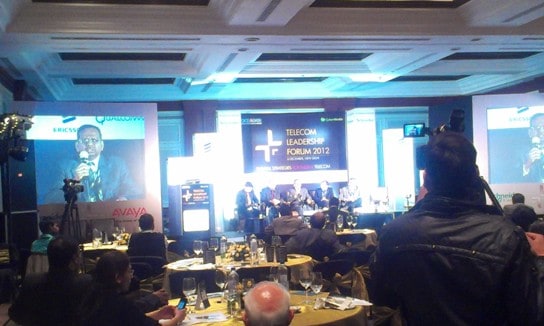
During the recent Telecom Leadership Forum (TLF) 2012 organised by Voice&Data, the telecommunications media brand of CyberMedia, intense debates were witnessed and as a result some excellent suggestions were put forth by industry veterans about what we need to do to revive the industry in India. But, it may not be any time soon that we can hope to see these recommendations getting implemented. The prime and immediate reason is the controversy surrounding the industry over government policy decisions in the past few years, resulting in Telecoms becoming an ‘untouchable’ sector for many. The other reason, of course, are the impending 2014 Lok Sabha elections because of which the UPA-II government may shy away from taking any tough policy decisions for this sector.
In the above backdrop, one sentiment that was particularly noticeable at the event (and understandable), was the predominantly defensive stance (barring a few exceptions) that underlined most speakers’ presentations and talks. The conference theme ‘Survival Strategies for Indian Telecom’ itself signified that the predominant focus was on safeguarding or preserving the status quo and seeking out defensive strategies for survival.
However, if we look back just a few years, we feel thatIndia’s Telcos missed putting in place a robust risk mitigation strategy to face the present stressed global macro-economic conditions. When business was booming in the early- and mid-2000s and ‘voice’ and ‘SMS’ ruled the business, Telco managements often paid scant or no attention to likely or emerging future scenarios. Probably, like a whole host of other industry leaders, they could not anticipate a downturn and global financial crisis of the magnitude and severity that the bursting of theUShome mortgage market bubble brought upon countries and industries around the world. This further complicated the challenge and left the best of players unprepared to face the current ‘hyper-competitive’ market conditions, particularly in a country likeIndiawhere Telecom tariffs went from being one of the highest in the world to one of the lowest anywhere in less than a decade.
The high investments in expansion of 2G networks, pricing pressure on voice and SMS tariffs, flight of global capital to ‘safe’ government bonds and securities, and the high overheads of servicing a large number of relatively low ARPU subscribers resulted in a race to meet current revenue shortfalls, with no thought or resources allocated for visualising or building possible, future business scenarios. The big lesson for the India Telecoms industry, but equally applicable to all their peers is – “in shine, remember to plan for the rainy days” – a lesson echoed throughout history through experience across generations, cultures and civilisations. To us, this age-old dictum stands out as a true lesson for the Telecoms industry. Industry leaders did not plan adequately to tackle the tough times, and so got caught by surprise when the global economic slowdown struck.
While cost cutting and other interventions may help to make the balance sheet look cleaner in the short term, but that is not going to make the industry fundamentals and growth prospects strong in the long run. If the ‘green shoots’ of optimism and hopes of market revival have started to emerge in late 2012 / early 2013, it’s a signal to nurture them and plan for growth with new, innovative service offerings, but remembering all the time to be prepared, if we are to be hit by similar geo-political uncertainty in the future.
Going forward, we would like to present a somewhat contrarian viewpoint – we don’t believe the India Telecoms industry is intrinsically in a bad shape and needs a rescue plan. The fact is that the India Telecoms industry is in a transition phase, and transitions are not always known to be smooth. The India Telecoms industry is now shifting from ‘voice centricity’ to ‘data centricity’ and the change in this focal business paradigm is bound to result in overall changes of greater magnitude and scope. The industry needs to change its ‘world view’ about customer needs and market expectations, and critically re-examine business practices, service offerings, competitive positions and investment and financing patterns.
We cannot replace voice with data or vice-versa. These have to co-exist and right now the issue is how to develop an optimal mix of infrastructure, management and marketing capabilities whereby the two ‘generations’ of services complement each other harmoniously rather than appear to compete.
No doubt, voice will remain the bread and butter of the industry but the level of maturity which our telecom industry has achieved, it deserves more than just bread and butter.
In the data space, we cannot afford to have price wars that we saw in the voice era, particularly after considering the high spectrum fees that operators had to pay for obtaining 3G bandwidth. But at the same time, if the market (consumers / subscribers) is not ready to accept plain vanilla data offerings at premium tariffs, it leaves us in a ‘Catch 22’ situation, which the industry has to address suitably through innovative use of technology “to produce every kilobyte of data transfer at the lowest possible cost”. This, we feel, should be the overarching goal of the India Telecoms industry, to grow and thrive in 2013 and beyond.
While spectrum availability and pricing are issues that will likely be addressed in the short- to medium-term (for instance, considering the downward revision of spectrum base price between 30-50% by the EGOM of the Government of India), there are other measures that operators can take to make themselves more cost efficient and customer focused. One solution which some operators have already adopted is sharing of infrastructure and supporting each other’s customers while roaming.
Other measures would include adopting a solutions approach to the problems of their customers across consumer and enterprise segments.
If operators, vendors and solution providers can come together and collaborate to develop high quality, India-specific, affordable devices and applications, the resultant increase in usage of voice and data services, and the higher ARPUs realised thereby will likely offset the cost of rolling out next-gen telecoms (3G / LTE) networks, faster than earlier anticipated. The trick may lie in delivering interesting and socially relevant services and apps, and fixing tariffs at attractive levels to induce trial and eventually, higher usage of mobile internet and data services across a wide spectrum of consumers,SOHOand SMB enterprise users.
Therefore, the new mantra for the India Telecoms industry should read – “in shine, remember to plan for the rainy days; in rain, plan to shine, again”.

Cool design aesthetics, ease of use and affordability dictate consumer tech lifestyles. When it comes to consumer...
More Details
With its ‘Proof of Space’ mining concept, the new Cryptocurrency, Chia has generated huge demand for large capacity...
More Details
While the timeline to the launch of 5G services in India is yet to be clear, it is...
More Details







