






Jul 30, 2026
Beyond Digitalization: Why Cognitization Will Define the Next Era of Supply Chains
Read More

On Day 2 of the India Mobile Congress (IMC) 2018, Ericsson invited Prabhu Ram, Head-Industry Intelligence Group, CMR, for an interaction with Helena Norrman, Senior Vice President, Chief Marketing and Communications Officer and Head of Marketing & Corporate Relations at Ericsson. She began her career at Ericsson working with media relations in 1998 and has headed up communications within sales and marketing, global internal communications, brand management and global marketing communications.
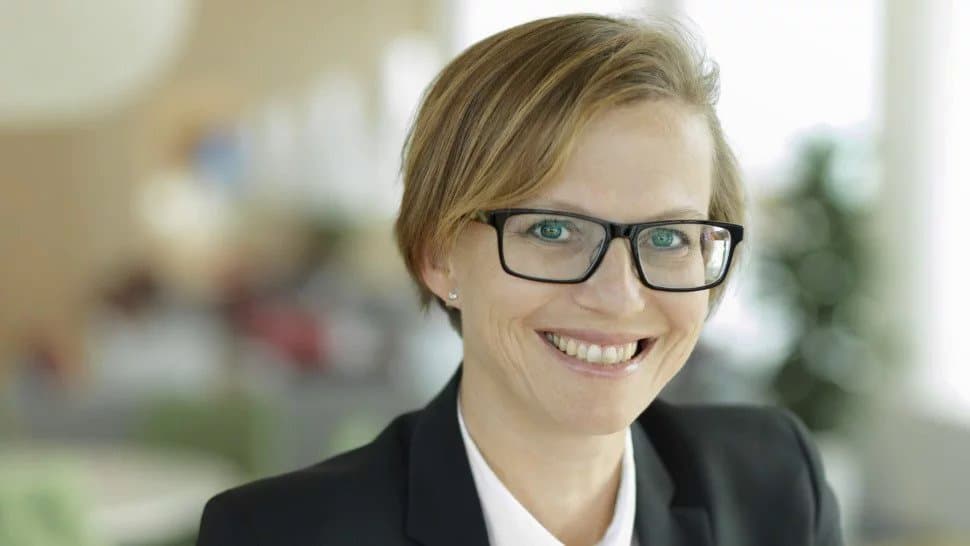
Throughout her time at Ericsson, Norrman has been heavily involved in the company’s efforts to continuously develop the brand and business strategy. Norrman and her team is tasked to translate business strategy into effective and efficient global activities to build brand and perception in support of business growth and company transformation.
Here are the excerpts of Prabhu’s interaction with Helena:
1. After a few challenging quarters, how has Ericsson shaped up?
We have seen some difficult quarters and that’s demanded a lot of the company to turn that around, but all the efforts are starting to pay off for us. We put in place our focused strategy when Börje Ekholm came on board as CEO in 2017 and we can see now that we are tracking well towards the targets we set for 2020.
We’ve been able to improve efficiency and reduce cost in the business, but at the same time we’ve continued to invest in our 5G-ready portfolio. That’s key because it’s important for our position in the market. It means we’re in a good position now to support our customers migrate efficiently and quickly into 5G.
We are on the right road now – but there’s still a lot of hard work ahead of us.
2. Where does India stand for Ericsson in the global scheme of affairs?
Of course we have a very long relationship with India –it was as far back as the early 1900’s that we sold our first telephony equipment – and we’ve been in India through the different phases of mobile technology. If you look at the changes that have taken place in Ericsson over recent years, India is increasing in importance for us. We have our business with India’s mobile network operators, and it’s a very big market – but we also have a lot more going on in India than that. India is a big hub for us for service delivery with over 19 000 people, and we’re doing both research and development and manufacturing in India. In fact one thing we announced last week at India Mobile Congress is that we’ve started exporting 5G ready telecom equipment from our factory in Pune to markets in Southeast Asia. The initial shipments consisting of Ericsson’s 5G-ready radio base stations and microwave equipment for 2G, 3G and 4G technologies have already been delivered to countries like Indonesia, Singapore and Thailand.
We have a big investment in India, that’s not just because it’s a big market but it’s also a place with lots of talent and competence – and that’s important for us too.
3. What possibilities does 5G hold for India’s future, and especially those in rural India?
I think to answer that question we can look back at 4G and the changes that it brought. We know that mobile broadband stimulated economic growth and it also brought tangible benefits to people all across society. We’ve seen the good it can do with lots of innovation in things like mobile banking, in bringing education to remote communities and helping small producers connect to market for their produce.
When it comes to 5G we’re expecting that it is going to bring a new wave of innovation, particularly around the Internet of Things. That’s opening up already with 4G and what we call cellular IoT, but in the next few years the focus will shift to 5G. We believe that 5G and IoT will accelerate a Digital India and bring benefits to both the telecommunications industry as well as broader society. In the case of industry benefits, Ericsson forecasts that by 2026, operators in India can earn up to an additional 13 billion USD in revenues, through industry digitalization enabled by 5G and IoT. The largest opportunity will be seen in sectors like manufacturing, energy and utilities, followed by public safety and healthcare.
In the case of society, there is a lot of talk about smart cities, but 5G and IoT is going to be important for rural communities too.
It’s always hard to predict what will be the winners when it comes to new ideas. I think 5G has a lot to offer for making education more accessible for instance, and in giving people access to better healthcare. We can see that it’s going to impact agriculture, in improving agricultural yields, and also increasing energy efficiency – it will help manage infrastructure and save energy.
I think the exciting thing about 5G though is that we don’t know all the things it will be used for. That’s something that’s going to depend on the imagination of the people that use it. Our role is to ‘make it a reality’ and then give them that chance.
4. In terms of 5G use cases, what do you think would be the India-centric 5G use cases?
That’s an interesting question. What we can do with 5G really is a lot more interesting for society as a whole than the technology itself. One thing that we’ve done to facilitate 5G in India is to open a Center of Excellence in Delhi together with the Indian Institute of Technology. A big reason for doing that is to look at the 5G use cases that are relevant to India. We’ve already talked about some of the key areas like agriculture and health care. There is also a huge opportunity in sectors like manufacturing, energy and utilities. Other areas we’re looking at along with Bharti Airtel, Reliance Jio and BSNL are applications for traffic efficiency services, connected vehicles, drones, and many other applications that you’ll be able to do with virtual reality.

At Autodesk University 2026, Autodesk outlined a vision for AI that goes beyond adding copilots to professional applications....
More Details
India’s smartphone market is undergoing a structural shift in storage preferences, driven by rising premiumization and the rapid...
More Details
If you are currently sitting on the fence about building a new PC, upgrading your workstation, or replacing...
More Details







