





Jul 30, 2026
Beyond Digitalization: Why Cognitization Will Define the Next Era of Supply Chains
Read More

 By Tanisha Saxena
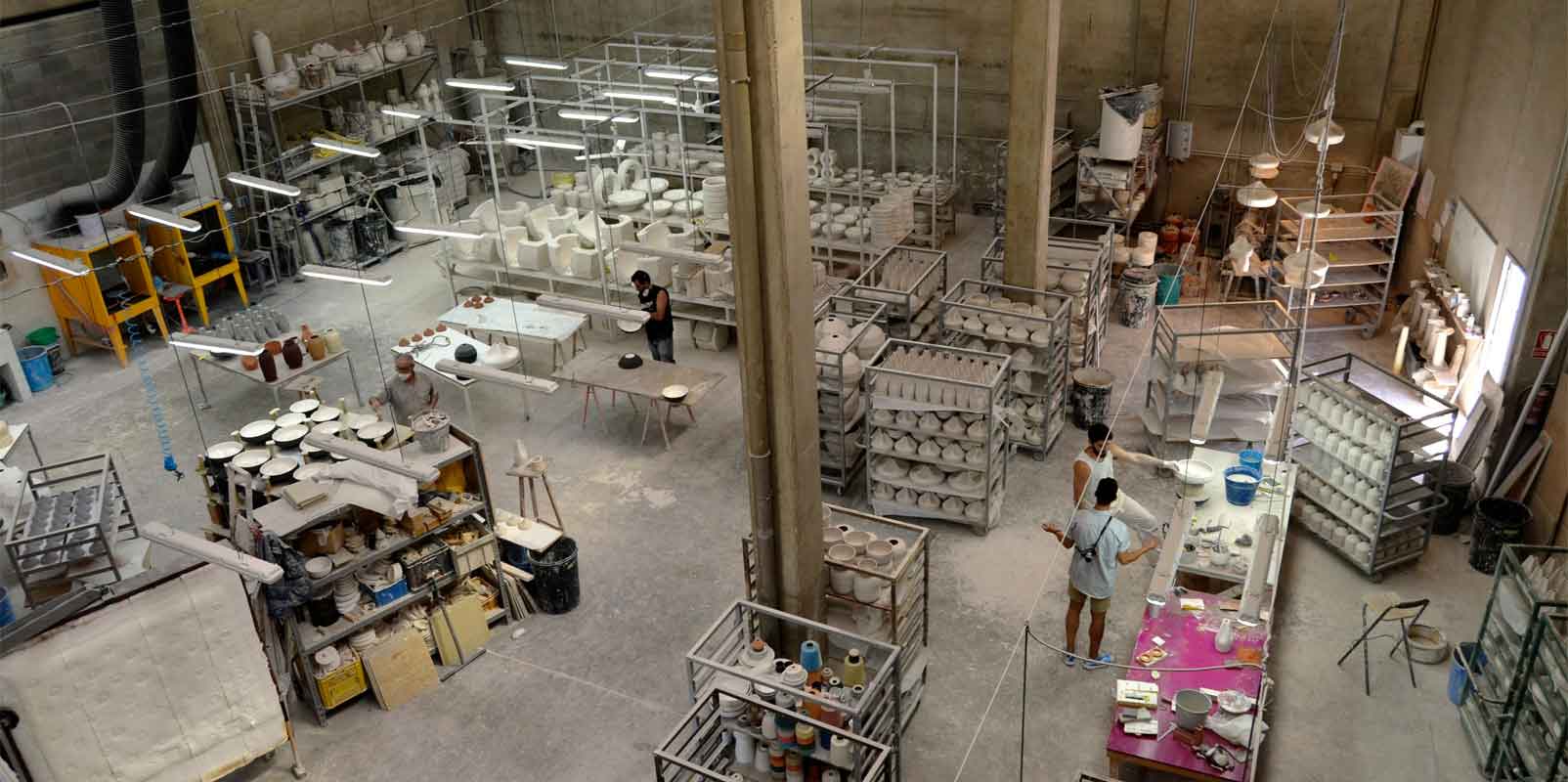
India being the second largest exporter of ceramic tiles in the world stands as a potent industry. The India ceramic tiles market size was valued at $3,720.2 million in 2019 and is projected to reach $7,144.7 million by 2027, growing at a CAGR of 8.6% from 2020 to 2027. Amongst the many ceramic associations we have, Morbi places itself as a major player. It is one of the three big clusters across the world. The industrial area located in Gujarat produces Wall tiles, Floor tiles, Vitrified tiles, Polished Glazed Vitrified Tiles, Twin Charged Tiles, Sanitary ware, Industrial ceramics and Technical ceramic products. We speak with the president of the Morbi Ceramic Manufacturers Association, Mr. Mukeshbhai Kundariya as he shares insights on the challenges, government support and future of the industry.
Q1. What are the present challenges for the ceramic industry?
Ans. Our biggest competition is China. In production we use fuel. Now, we have two types of gasses, Natural gas and propane gas. Our source of supply of natural gas is Ukraine and Russia. After the war, the supply got badly affected and then the government pushed us to use propane gas. Tanks and machinery were set up and every company invested around 60-80 lakhs on arrangements.
Then we started using propane gas as the rates were comparatively low. In fact, 10-15% of prices have been reduced recently in the international market. However, the central government raised import duty. Second, the demand in the domestic market has drastically reduced. We are not even able to figure out exactly why the demand has reduced in the domestic market but it could be possibly due to overproduction and price fluctuations.
Q2. What kind of support did the ceramic industry get from the Government?
Ans. During the pandemic, we thought that the business was over. But after the pandemic, the government has been extremely supportive. The loans that they offered were at a very low-interest rate. It was the biggest step in boosting the ceramic industry. In fact, we had issues in the recent past with Saudi Arabia in relation to the ceramic industry but the central government’s intervention helped us sail through the tide.
Q3. As we adopt sustainability, do you think the ceramic industry can too walk on this path?
Ans. See, Sulfur dioxide (SO2) is a short-lived atmospheric air pollutant emitted or formed in the atmosphere via natural gas. However, I would like to say that it is extremely short-lived and not a thing for hullabaloo. Surely, we are embracing sustainability and the ceramic industry can also become sustainable with the adoption of recycled and re-use scenarios. Generally, ceramic materials do not degrade naturally and therefore, there could be unique ways developed by engineers for ceramic waste. Having said that, Studies have shown that RCCR (recycled crushed ceramic rubble) is technically practicable for stabilizing highly expansive soils (HES), that is to say, that the aggregated ceramic waste can continue to contribute to a healthy environment beyond its component life cycle.
Q4. What is the future of the ceramic industry?
Ans. If you see at the international market then in countries like Saudi Arabia and Turkey, there are ceramic industries being set up. We are highly dependent on the international market and with increasing plants across these countries we are getting affected. China and Europe are the main competitors. If we see today then India is the second largest exporter of ceramic tiles in the world. We are exporting to more than 180 countries costing about 15-16 crores.
With urbanization in place, the demand for residential and commercial construction is expected to grow in the country. Consequently, the ceramic industry is expected to receive a rapid boost over the coming years. Besides the international market, the other factor behind the growth is the residential and commercial structure.
Moreover, the income of the citizens is growing especially in the urban set-up. The middle class is owning a house which wasn’t the case earlier. We have a great democratic system and people are constantly migrating from rural areas of the country to urban settings. We are expected to form 77 new cities with more than 1 million population by 2030. I would say that the coming years will be indeed flourishing.

Hubballi industrialist sworn in along with new five-member team after Karnataka Small Scale Industries Association’s AGM BENGALURU, June...
More Details
Hubballi industrialist sworn in along with new five-member team after Karnataka Small Scale Industries Association’s AGM BENGALURU, June...
More Details
Hubballi industrialist sworn in along with new five-member team after Karnataka Small Scale Industries Association’s AGM BENGALURU, June...
More Details







