

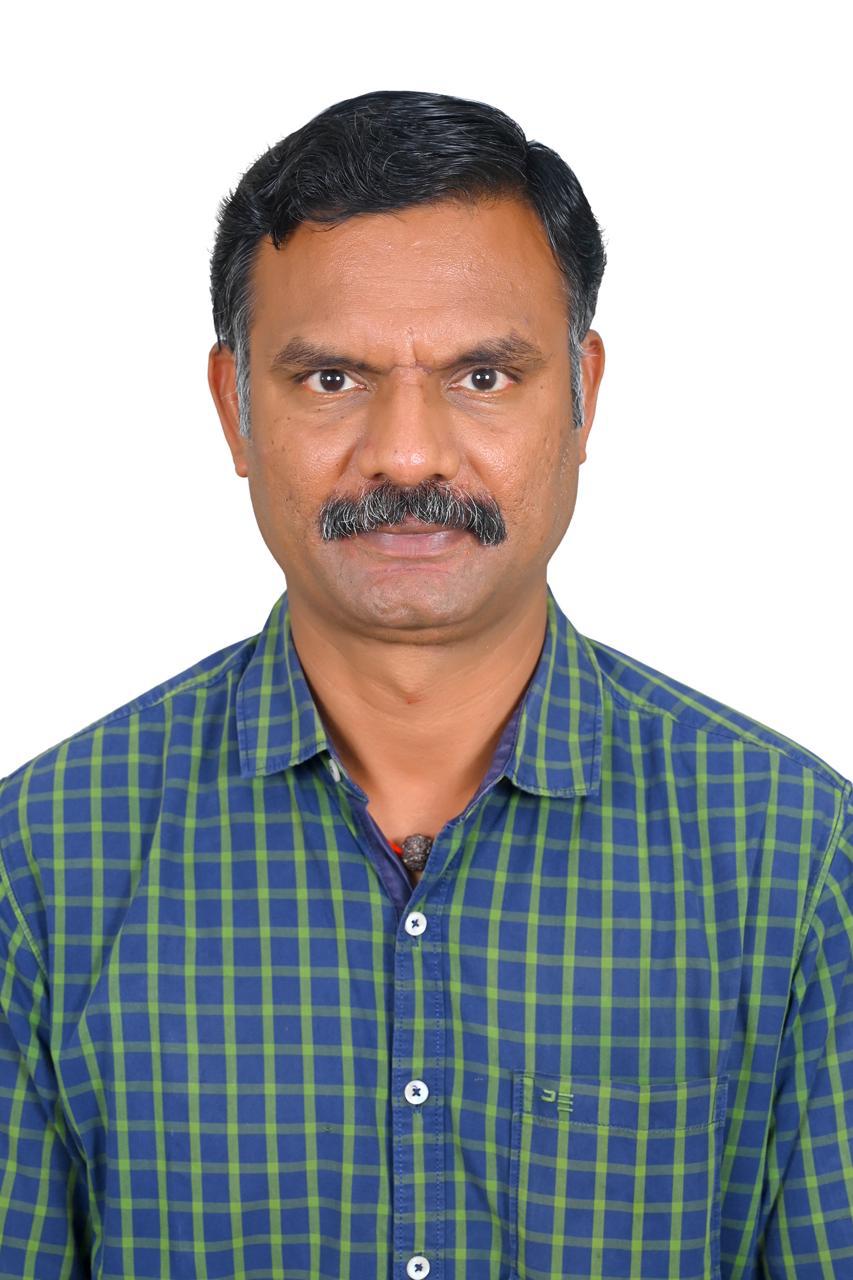
Tiruchirappalli’s ancillary manufacturing base for Bharat Heavy Electricals Limited (BHEL) has shrunk from 548 registered units to barely 100 that are still operational, according to Senthil Kumar P., President of BRAMAS, the association representing these vendors.
He attributes the decline to a pan-India tender policy that ignores the region’s distance from both raw material sources and end markets, chronic delivery delays from the Steel Authority of India Limited (SAIL), and a late delivery penalty system he says punishes vendors regardless of where the fault lies.
Steel for these units typically comes from Bhilai, Rourkela and Raigarh in Central and Eastern India. The finished job, painted, machined and ready for a power plant boiler, mostly travels back the same way, since most of BHEL’s end customers are power plants in the Western, Eastern and Northern regions. Tiruchirappalli sits roughly 2,000 to 2,500 kilometres from both ends of that journey, a distance Senthil Kumar says his generation inherited as an industrial hub but which now works against it under the current procurement structure.
The ₹ 17,000-rupee gap Central India never has to close
BHEL runs a pan-India tender policy that bundles transportation cost into a single package price regardless of where a vendor is located. On paper, that sounds fair. In practice, Senthil Kumar argues, it favours vendors based in Central India, who sit far closer to both the raw material source and the delivery point.
“We are far, far away from the raw material and finished product point,” he said. A Tiruchirappalli vendor must first bring steel down from Central India, complete the processing and painting, then transport the finished job all the way back, while pricing at par with a competitor who barely has to travel. By his estimate, that gap alone is worth roughly 15,000 rupees a tonne on top of a base rate of about 2,000 rupees, pushing the total effective advantage for the Central India-based vendor to around ₹ 17,000 a tonne. “Their profit margin is there,” he said.
The freight calculation compounds the problem. BHEL, he said, prices transport on a telescopic basis where the rate barely changes within the first 200 kilometres, while a Tiruchirappalli unit routinely hauls material 2,000 to 2,500 kilometres in each direction. “This disparity in procurement policy is slashing down the vendors in the MSMEs of the Southern region,” he said, warning that unless the Central and state governments intervene, “all the units will vanish. This will happen one day.”
His proposed fix is straightforward: separate the tender into three distinct components, namely conversion charges, raw material cost and transportation, rather than bundling all three into a single landed price. Conversion rates, he said, are genuinely uniform across India and pose no issue. Raw material pricing could be equalised by region. It is transportation, calculated honestly on a telescopic, zero-kilometre basis, that he wants stripped out of the tender altogether and subsidised separately by the government.
Built by Kamaraj for the region, now serving everyone but it
The frustration carries a historical weight. Senthil Kumar credits Tamil Nadu’s former chief minister K. Kamaraj with bringing “this huge, mighty organisation” to Tiruchirappalli specifically to develop the region and its people. Today, he said, the reality has inverted: “This Trichy region is serving for the other area peoples, without supporting the local people.” Repeated appeals to BHEL management on the point, he said, have gone nowhere.
The case for pin-code-based procurement
Asked whether a pin-code-based procurement policy, one that gives priority to vendors within a defined radius such as 40 or 100 kilometres of a plant, could address the imbalance, Senthil Kumar was unequivocal. “Definitely. Local people should get a reservation,” he said, noting that the organisation was originally set up four or five decades ago precisely to support local industry.
He pointed out that the Southern region lacks the raw material base that the Northern part of the country enjoys. Salem Steel Plant is the only integrated steel facility nearby, and its output falls well short of regional demand, forcing vendors to source almost everything from Bhilai, Rourkela and Raigarh. Short of a formal local reservation, he wants the government to subsidise transport and equalise raw material pricing nationally, so that a genuinely pan-India tender becomes fair in practice rather than only on paper.
Squeezed between two PSUs, with no one taking the blame
If freight is one blade of the scissors, the relationship between BHEL and the Steel Authority of India Limited (SAIL) is the other. MSME vendors depend on SAIL for raw material, but Senthil Kumar said SAIL routinely declines to commit to a delivery date when a purchase order is placed, sometimes releasing material only after four or five months. BHEL, meanwhile, expects jobs completed within three or four months of the original order and imposes late delivery charges when that timeline slips, regardless of whether the delay originated with SAIL.
“Without examining the condition or considering any ground reality, BHEL is imposing late delivery charges on MSMEs,” he said. “Slowly, these MSMEs got eroded due to this only reason.” Asked whether the two public sector units ought to coordinate directly, he said they already claim to: “They are always interacting with each other. They are also instructing them to supply the material. But nothing will happen. We are the sufferers. We are the scapegoats between these two PSUs.”
GeM helps, in theory, but the theory has gaps
The Government e-Marketplace, the online procurement platform meant to level the field for small suppliers, gets a qualified endorsement. Senthil Kumar said GeM does support MSMEs but carries “certain hidden agendas” in how policy is applied. His point is narrower than regional bias: categories where distance genuinely affects cost need separate, distance-based pricing, the way commodities such as fuel are priced uniformly nationwide, rather than being clubbed into one common policy that assumes every product behaves the same way.
He pointed to an earlier intervention by former Industries Secretary of Tamil Nadu, Mr Irai Anbu, who studied the sector’s difficulties and made recommendations to the Tamil Nadu Government.
From an 80:20 split to its reverse
Perhaps the starkest number in the conversation is this: the Southern region, by Senthil Kumar’s account, once handled roughly 80 percent of BHEL’s job work nationally, with the rest of India accounting for the remaining 20 percent. That ratio, he said, has now reversed. Order volumes at BHEL remain healthy, but vendors are exiting the Southern ecosystem one by one, and the bulk of the work has migrated North.
BHEL currently offers two broad arrangements, one where the vendor supplies their own raw material, and another, described to BRAMAS as an outsourcing scheme using BHEL-supplied material, under which the conversion rate on offer is, in his words, simply not affordable. When vendors pushed back, he said BHEL pointed them towards a separate reserved allocation instead, but the pricing there was no better. “Whatever we are working on, it is only for the expenditure, and no profit,” he said. “Just to keep the industry alive, we can do that job.”
What other countries do differently
Asked to compare the Indian experience with what he has observed of small manufacturing elsewhere, Senthil Kumar described a fundamentally different relationship between large principal companies and their smaller suppliers abroad. Bigger companies there, he said, effectively nurture smaller ones “like children,” investing in their capacity and gradually scaling back direct support as the smaller firm develops, rather than squeezing margins from day one. “We never expect that much,” he said. “At least a reasonable margin is enough for us to survive, and for future development we also need to invest.”
The tender ranking system that quietly traps vendors
Senthil Kumar offered a detailed account of how BHEL’s tender ranking mechanism, L1, L2, L3 and so on, can work against the very vendors it is meant to serve. BHEL, he said, already holds detailed data on each vendor’s monthly capacity. A unit capable of producing 100 tonnes a month might still be awarded a single purchase order for 1,000 tonnes after winning a tender at the lowest, or L1, ranking.
Vendors feel compelled to bid regardless, he explained, because halting production even briefly means defaulting on obligations to their own local sub-vendors and banks. “The wheels of commerce should not be stopped,” he said. But once the order is placed for the full quantity, only the vendor’s actual monthly capacity gets delivered on time, for instance 100 tonnes a month for three months, leaving a large balance that then falls into late delivery. “This erodes whatever the already completed tonnes have earned. Margins also get eroded. This is how they squeeze the vendors.”
Zero artificial intelligence, and a good reason for it
On the subject of automation and artificial intelligence, Senthil Kumar was unambiguous: adoption in his sector is effectively nil. Engineering drawings for every job originate with BHEL and arrive as hard copies that vendors work to directly. “Their basic drawings, general arrangement drawings, are very confidential,” he said. “They cannot release anything. It cannot go on AI.” Some limited digitisation happens for CNC cutting, where machine-readable data conversion is possible, but only when BHEL itself supports it. Elsewhere in the ecosystem, he said, technology use is confined to basic accounting software, “very negligible” in scale. Cutthroat margins, he added, leave little room to invest in robotic welding, CNC upgrades or other automation even where vendors might otherwise want to.
Active members reducing slowly, association says
BRAMAS put a number to the trend. The association once counted 350 enrolled members. Today, Senthil Kumar said, about 60 are actively purchasing and operational, with a further 40 or so still on the rolls even as their activity levels reduce slowly.
His asks going forward are pointed: government support to safeguard the surviving units, leniency from banks so vendors can rebuild efficiency rather than being pushed further into distress, and a fundamental change in how BHEL applies late delivery charges. “I don’t say late delivery is an entirely wrong policy,” he clarified, “but based on capacity, they can easily take the data of whatever progress has been made so far, and load work on the vendor accordingly.” Structured that way, he estimates, only about 10 percent of a given order might realistically fall into late delivery territory, a workable outcome for both sides.
Ranipet shows it can be done differently
BRAMAS has been in touch with the vendor association at BHEL’s Ranipet unit, and the contrast, in Senthil Kumar’s telling, is instructive. Ranipet’s management is, in his words, considerably more accommodating towards its vendor base. When the war in Ukraine disrupted supply chains, the government invoked force majeure, and Ranipet extended a four-month waiver on late delivery charges from mid-February onward. Tiruchirappalli, he said, did not follow suit. “They are only getting revenue from these LD charges,” he said. “They are not interested. They don’t want to take a risk that will affect their career.”
He cited a further instance closer to home: an extended shortage of LPG gas left vendors unable to proceed with certain jobs for more than 60 days after receiving material, a delay SAIL itself acknowledged. Even so, he said, BHEL continued to impose late delivery charges on the affected purchase orders, despite explicit government instruction that such waivers be granted on economic and social grounds. “Still, they are imposing LDs on those same POs,” he said.
A prediction and a warning
Asked what the region looks like in three or four years if nothing changes, Senthil Kumar did not hedge. “Nobody will be there. In Trichy, no industry will be alive,” he said, adding that the damage would not stop at the vendor units themselves. Transport operators and the wider local economy that has grown around this MSME base would also be affected. “Now the entire ecosystem will suffer.”
For an industrial cluster that Kamaraj envisioned as an engine of regional employment, and that once did the lion’s share of BHEL’s job work nationally, that would mark a quiet but complete reversal of its original purpose.