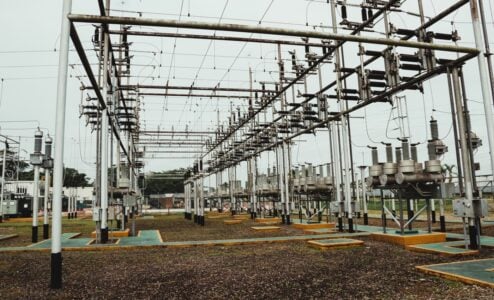



Tiruchirappalli has long served as the heavy engineering backbone of central Tamil Nadu. Driven historically by major public sector anchors, the district’s vibrant ecosystem of micro, small, and medium enterprises (MSMEs) has built a formidable reputation in fabrication, boiler pressure components, and precision engineering. Today, as the regional industrial landscape evolves, the growth trajectory of Trichy’s small-scale manufacturers remains deeply tied to traditional manufacturing pillars while eyeing high-potential defense expansion.
In an interview on the region’s industrial outlook, Mugil P Rajappa, President of the Tiruchirappalli District Tiny & Small Scale Industries Association (TIDITSSIA), highlighted that the primary operational lifeline for local manufacturing units continues to revolve around three core public-sector anchors: Bharat Heavy Electricals Limited (BHEL), the Heavy Alloy Penetrator Project (HAPP), and Indian Railways. These public entities provide the critical baseline orders that keep the region’s heavy fabrication units running.
However, Rajappa emphasized that unlocking the next phase of scale for local businesses demands urgent momentum on the defense front. Although Trichy has been designated as a strategic node within the Tamil Nadu Defense Industrial Corridor, ground-level execution needs to accelerate rapidly to convert policy discussions into tangible purchase orders for local plants.

Within the defense domain, TIDITSSIA sees Navy-related projects offering the most immediate alignment for local units. Because shipyards rely extensively on heavy fabrication—a domain where Trichy’s engineering workforce already possesses deep technical mastery—naval defense manufacturing represents the highest-potential growth route for the district’s scaling entrepreneurs.
Beyond expanding market opportunities, securing affordable capital remains a top priority on TIDITSSIA’s policy agenda for both the State and Central Governments. Outlining key expectations, Rajappa pointed to a stark disparity in the financial framework: while home loans are accessible at interest rates as low as 7%, commercial and business loans for MSMEs often carry interest burdens close to 13%. Lowering business loan rates to comparable levels, he argued, would dramatically encourage new founders to enter business and enable existing units to reinvest in scaling up.
Furthermore, the association is pushing for comprehensive fiscal reforms. TIDITSSIA advocates that taxation should either be reduced across the board or converted into uniform tax slabs. Streamlining these tax structures, according to Rajappa, is essential to ease compliance burdens, prevent cash-flow strain, and create an equitable playing field for small industrial enterprises.
A particularly critical operational bottleneck raised by Rajappa is the unsustainable burden of electricity charges across Tamil Nadu. He pointed out that power utilities have restructured tariff frameworks, replacing traditional ‘minimum charges’ with heavy ‘fixed charges’ levied on connected load, on top of escalating consumption rates and additional CESS. This compounded tariff structure has severely eroded margins, pushing numerous micro and small units to the brink of closure. Rajappa noted that current solar energy policies have done little to alleviate this crisis, as existing solar frameworks fail to deliver practical or cost-effective relief for small-scale industrial plants.
Changes in the GST Structure Needed
Rajappa also highlighted a major liquidity challenge within the Goods and Services Tax (GST) framework concerning credit sales. Small manufacturers frequently supply goods on credit terms, yet the current tax regime forces the seller to deposit GST upfront to the government before receiving payment from the buyer. To resolve this working capital drain, he urged that the GST liability should be borne directly by the buyer upon payment or remitted at the buyer’s end. Structuring GST collection around buyer realization would safeguard small units from cash-flow crunches while simplifying tax collection for the government.
Skill-based Education is the Need of the Hour
To ensure long-term sustainability, Rajappa emphasized the urgent need for educational institutions to pivot toward skill-based education. He stressed that bridging the gap between academic curricula and practical, job-ready technical training is vital for the region’s industrial workforce. By integrating hands-on industrial skills into college and vocational programs, graduating youth can seamlessly transition into shop-floor roles, equipping Trichy’s MSMEs with the talent required to drive future innovation.